Brian Donohue

About

“We are what we pretend to be, so we must be careful about what we pretend to be.” ― Kurt Vonnegut

South Korea Blames North Korea for March Cyberattack

Officials from the Republic of Korea are saying North Korea’s military intelligence agency was responsible for the mid-March malware attacks that knocked several prominent South Korean banks and broadcasters offline, according to a Dow Jones Newswire report.


Adobe Ships Fixes for Flash, ColdFusion and Shockwave in April Patch Release

Adobe published its monthly security bulletins today, pushing out updates that address issues in the company’s ColdFusion platform as well as its Flash and Shockwave Players.The first bulletin provides a hotfix for Adobe’s ColdFusion platform, resolving anonymously reported flaws that could allow attackers to impersonate authenticated users or gain unauthorized access to the ColdFusion administrator console in versions 10, 9.0.2, 9.0.1, and 9.0 for Windows, Macintosh, and UNIX.


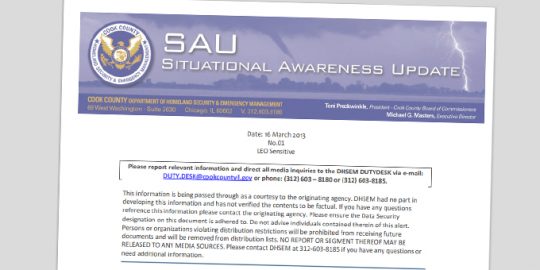
The call-center equivalent of network-based denial-of-service attacks, known as telephony denial-of-service (TDoS), have targeted emergency services among other industries, enough to garner attention from the Department of Homeland Security, Federal Bureau of Investigation, Federal Communications Commission and others in an confidential alert memo, Krebs on Security reported.

At least one group of cybercriminals has taken to Evernote, the popular cloud-based note-taking and data-sharing service, as a base of operations for a data stealing Trojan, according to TrendMicro threat response engineer Nikko Tamana.

Cisco Systems issued seven security updates yesterday, all of which patched vulnerabilities in the networking giant’s internetwork operating system (IOS), the software it deploys on the majority of its routers and network switches.

It appears that a spear phishing campaign was the genesis for the wiper malware infections that ultimately knocked several prominent South Korean banks and broadcasters offline last week, according to a malware analysis performed by researchers from the Finnish cybersecurity firm F-Secure.

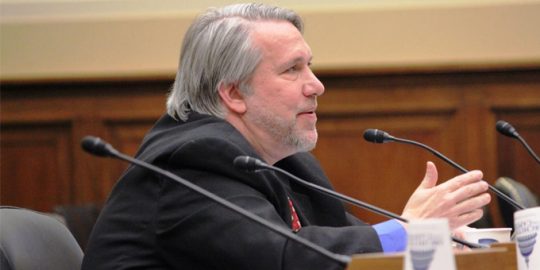
The House Foreign Affairs Subcommittee on Europe, Eurasia, and Emerging Threats typically is more concerned with economics and political issues than cyber attacks, but the members spent this morning in a hearing trying to come up with an answer to a fairly straightforward, but thorny question: What consequences are serious and meaningful enough that they will deter U.S. enemies from infiltrating the country’s networks?