Dennis Fisher

About

Dennis Fisher is a journalist with more than 13 years of experience covering information security.

Eugene Kaspersky: Clear Need to Define Cyberweapons and Cyberwar

The term cyberwar has become a catch-all used by politicians, talking heads and others to encompass just about any online threat, regardless of the attacker or the target. Among security professionals, however, the word has a specific connotation–an attack by one nation against another nation’s infrastructure. Aside from the semantic issues, one of the major challenges for government agencies and security teams dealing with his problem is attribution and recognizing what constitutes an actual act of cyberwar. Stuxnet, Flame and their cousins may qualify, but more discussion is needed to help define the terms of these new conflicts, experts say.
Social Media Q&A With Eugene Kaspersky

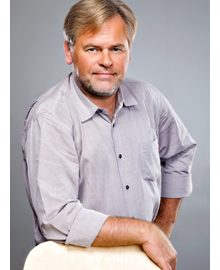
The security of social networks and the people who use them every day has become a serious concern for enterprises and consumers alike. Millions of people rely on networks such as Facebook and Twitter to communicate and connect with friends and colleagues and attacks against the networks themselves and the users on them undermines some of the trust people place in them. Eugene Kaspersky, CEO of Kaspersky Lab, recently answered questions on the security concerns surrounding social media and what people can do to protect themselves on these networks.

Gary McGraw on Cyberwar and the Folly of Hoarding Cyber-Rocks

Dennis Fisher talks with Gary McGraw of Cigital about some of the holes in the current thinking about cyberwar, why traditional military analogies don’t hold up in cyberwar discussions and how better defense can make a difference. McGraw will be discussing his thoughts on cyberwar at King’s College London this week.


UPDATED–A group of customers is suing gaming giant Blizzard Entertainment in connection with a data breach in August that resulted in user email addresses, hashed passwords and other information being stolen by attackers. The suit claims that the company did not do enough to secure users’ accounts before the compromise and that the company now is forcing users to pay for a two-factor authentication system to increase the security on their accounts.

Dennis Fisher talks with Dan Guido, CEO of Trail of Bits and hacker-in-residence at NYU-Poly, about the school’s first mobile security conference, called THREADS, taking place this week in Brooklyn. Part of the college’s Cybersecurity Awareness Week (CSAW), THREADS will include speaker such as Dino Dai Zovi, Guido, Jon Oberheide and Vincenzo Iozzo.

The Tor Project has fixed a flaw in its anonymization and privacy software that leaked information from memory on some machines running Tor that could give an attacker access to sensitive information stored in the cache. The issue was caused by the way that some compilers handle a specific function in the Tor client.

Dennis Fisher talks with Chris Soghoian, a principal technologist at the ACLU, about the developing market for buying and selling exploits and vulnerabilities. Soghoian has been a vocal critic of exploit sales and in this podcast he discusses the reasons why and why he thinks the policymakers in Washington need to get involved.

Apple has fixed nine vulnerabilities in its QuickTime media player software, all of which can be used to execute arbitrary code on vulnerable machines. Several of the flaws are buffer overflows, and users who still run QuickTime should update it as soon as possible.

When Barack Obama was sworn in four years ago for his first term, there was genuine optimism that he would make meaningful improvements to the security of the nation’s critical infrastructure as well as the policies that govern security and privacy in the private sector. After the Bush administration relegated security to afterthought status for much of the 2000s as it concentrated on terrorism and fighting two wars, many in the security community were hopeful things would soon get better. Things certainly have changed, but whether they’ve improved is a difficult question. With Obama’s second term about to begin, there are still plenty of things he can do to effect real change.

Hi, folks! 

For the last two weeks each and every fan of official Kaspersky Lab Facebook pages worldwide had the chance to ask our CEO, Eugene Kaspersky, anything at all (and we must say that some of our fans took this literally:)) Thank you for the hundreds of great questions! There’s nothing more valuable in this world for us than your feedback and ideas on how to proceed with our quest to Save the World in the most efficient way. We’ve selected the most interesting and edgy questions of yours and asked Eugene to answer them with his usual honesty.