Dennis Fisher

About

Dennis Fisher is a journalist with more than 13 years of experience covering information security.

Exploit Code, Metasploit Module Out for Ruby on Rails Flaws

Just two days after the disclosure of a string of serious vulnerabilities in Ruby on Rails, researchers have released proof-of-concept exploit code for a couple of the flaws and the team at Metasploit have released a module for the penetration testing framework that exploit one of the bugs, as well.


Exploit Code for Ruby on Rails Flaw Likely on the Horizon

The vulnerabilities patched Tuesday in the Ruby on Rails Web framework have security researchers warning of the potential for serious attacks and saying that one of the bugs in particular could be easy prey for attackers. The most serious of the flaws is in the parameter parsing function and could allow attackers to run arbitrary code in vulnerable apps. 

Critical Flaws Patched in Ruby on Rails

For the second time in less than a week, the developers of the Ruby on Rails framework are urging users to update their installations as soon possible after the discovery of several critical vulnerabilities. Last week it was a SQL injection vulnerability in Ruby on Rails, and today comes the disclosure of a series of vulnerabilities that could enable an attacker to compromise vulnerable Rails applications.


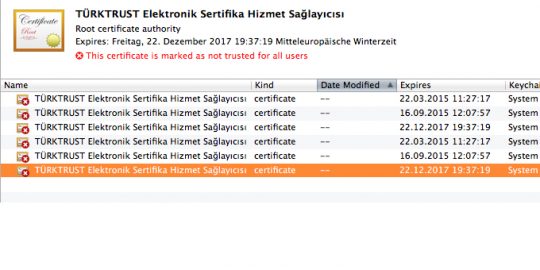
A week after the disclosure of the existence of a fraudulent certificate for Google domains that resulted from the mistaken issuance of a subordinate certificate by a Turkish certificate authority, officials at TURKTRUST are continuing to defend their actions in response to the incident, and say that there is “no evidence of any attack or hacking attempt on our system”.

The series of missteps and failures that led to a Turkish government-related agency eventually ending up with a valid wild card certificate for Google domains began in June 2011 when the TURKTRUST certificate authority began preparing for an audit of its systems and started moving some certificate profiles from production systems to test systems. Two months later, a pair of subordinate certificates–which carried the full power and inherited trust of TURKTRUST’s root certificate as far as most browsers were concerned–were issued, and one of them later was used by a Turkish government transportation and utility agency to create an attacker’s holy grail: a valid certificate enabling him to intercept encrypted Google traffic.

Google has pushed out an update that blocks an intermediate digital certificate for *.google.com after discovering that a Turkish certificate authority had mistakenly issued intermediate certificates to two organizations that should only have gotten normal SSL certificates. That error gave those two organizations the power to issue certificates that carried the same authority as the CA itself and allowed one of the organizations to issue the fraudulent wild card certificate for Google. One of the groups that obtained the intermediate certificate is a Turkish government agency and at least one of the major browser vendors said there was evidence the ceritificates had been used in an active attack.

All of the current versions of the Ruby on Rails Web framework have a SQL injection vulnerability that could allow an attacker to inject code into Web applications. The vulnerability is a serious one given the widespread use of the popular framework for developing Web apps, and the maintainers of Ruby on Rails have released new versions that fixes the flaw, versions 3.2.10, 3.1.9 and 3.0.18. 

There’s a natural inclination for people at the end of each year to look back, take stock and try to draw some grand meaning or life lessons out of the events of the past 12 months. This is a particularly risky and difficult thing to do in the security industry, given its inherent unpredictability and chaotic nature. That doesn’t stop people from doing it, mind you, it just makes the process more difficult and often more humorous. The weird thing about 2012, though, is that it turned out to be one of those years that may well end up marking a turning point for consumers, enterprises and governments around the world.