Michael Mimoso

Citadel Trojan: It’s Not Just for Banking Fraud Anymore

Banking malware has primarily been just that, an attack tool used against financial institutions to steal money from online bank accounts. But what if cybercrime gangs decided to flip that on its head, and use malware such as the Citadel banking Trojan to steal credentials from not only banks, but government agencies and commercial businesses?


Inside the Targeted Attack on The New York Times

The Chinese group behind the targeted attack on the New York Times was laser focused on accessing the email of a reporter and the newspaper’s former Beijing bureau chief to the point that it used an inordinate number of custom malware samples to get the job done.“In terms of statistics, 45 [custom malware samples] as a ratio to the number of computers involved, 53, is a high ratio,” said Richard Bejtlich, chief security officer of Mandiant, the forensics firm hired by the Times to investigate the targeted attack. “Usually, you’ll see one or two for the relatively small number of systems involved.”

Report: Mainstream Websites Host Majority of Malware

While Android malware continues to grow faster than other malware types, it still accounts for only a minute fraction of all malware on the Web, according to Cisco’s annual security report released this week.Compromised websites hosting malicious Java and iFrame attacks and other malware far and away outpaces all other delivery vectors for malware, Cisco’s report said.


A number of security vulnerabilities were repaired in the latest version of the Opera browser, which was released today. However, a security researcher says that users who downloaded the browser from Apple’s Mac App Store won’t have access to version 12.13; in fact you’ll be two revs behind as of today.Graham Cluley of Sophos reported today that Opera 12.11 is the latest version available at the Mac App Store. Version 12.12 was released Dec. 18.

Outcomes in security tend to be about data loss; stolen pharmaceutical formulas, jet fighter blueprints, patient records, credit card numbers etc. All of these come with a great cost to the victim and make for sexy headlines. But far too little is dissected and analyzed about service disruptions.

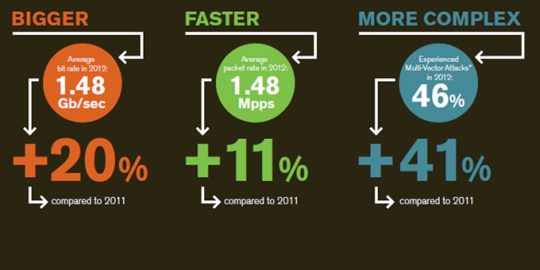
Back in the dark days of dial-up connectivity, attackers wouldn’t bother compromising home computers as bots to be used in distributed denial-of-service. The lack of bandwidth made PCs persona non grata in the DDoS world. Instead, attackers targeted Web servers, the only machines with the high-speed broadband connections to make DDoS viable.In the years since, broadband has literally come home and personal machines have been compromised by the millions for everything from spam to flood attacks against websites and online services.

Government requests for user account information made to Twitter pale in comparison to the number made to Google, but nonetheless, the number is on the rise according to Twitter’s Transparency Report, released today. Twitter’s report said government requests are generally made in conjunction with some kind of criminal investigation; 815 requests came from the United States government and Twitter complied 69 percent of the time; 57 percent worldwide.

Facebook is serious about its new Graph Search feature, which helps users of the social media site narrowly search for friends with common interests in a much more intuitive fashion than a Google search, for example. Founder Mark Zuckerberg had tagged Graph Search the third Facebook pillar, right alongside the site’s news feed and timeline. So why are security and privacy experts nervous? There’s some serious horsepower behind Graph Search, and there are users whose interests aren’t as benign as finding friends of friends in a particular location who happen to like country music, fine wine and yoga.