Government


Federal Reserve Admits It was Briefly Hacked During Super Bowl

Two days after the group Anonymous boasted it had broken into a government Web site and had the data dump to prove it, the U.S. Federal Reserve admitted it was hacked.”The Federal Reserve system is aware that information was obtained by exploiting a temporary vulnerability in a website vendor product,” a spokeswoman told Reuters Tuesday. “Exposure was fixed shortly after discovery and is no longer an issue. This incident did not affect critical operations of the Federal Reserve system.”


Experts Say CEOs Need to Get Handle on Cyberespionage Problem

NEW YORK–The long list of high-profile cyberespionage and cybercrime attacks that have surfaced in the last couple of years has led to broad discussions in the security community, government circles and elsewhere about the scope of the problem. Those discussions now are just starting to reach into the boardroom, and security experts say that any CEO who isn’t concerned about this problem is living in the past.


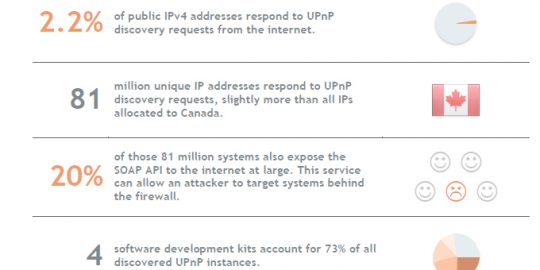
In a project that found more than 80 million unique IP addresses responding to Universal Plug and Play (UPnP) discovery requests, researchers at Rapid7 were shocked to find that somewhere between 40 and 50 million of those are vulnerable to at least one of three known attacks.

A Virginia appeals court on Friday denied a right-to-access order filed by the Electronic Frontier Foundation and the American Civil Liberties Union on behalf of Icelandic parliamentarian Birgitta Jonsdottir and computer security researchers Jacob Appelbaum and Rop Gonggrijp. The denial confirms a lower court’s ruling that neither those individuals nor the public has the right to see the documents a court uses to justify its warrantless acquisition of information.

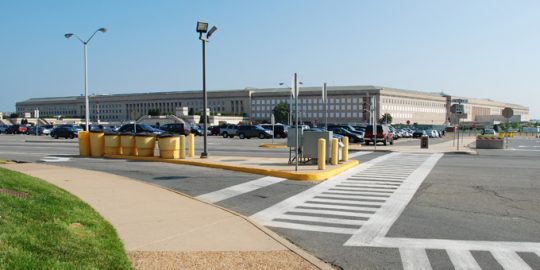
As the Senate pushes for legislation to improve information-sharing on threats and attacks and President Barack Obama prepares to issue an executive order on cybersecurity, the Department of Defense is looking for a massive increase in the number of trained cybersecurity personnel helping to defend the country’s private and public networks.

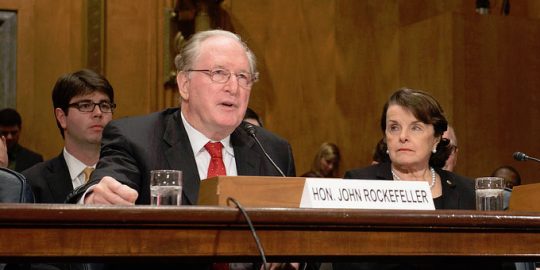
There is no shortage of problems for President Obama and the new Congress to tackle as they settle into their offices in Washington, D.C., this week, and one of the topics that’s at the top of that list is cybersecurity. Earlier this week a group of Democratic senators introduced a new cybersecurity bill, and now Janet Napolitano, secretary of the Department of Homeland Security, is taking to the stump, saying that new legislation is required to prevent a “cyber 9/11.”

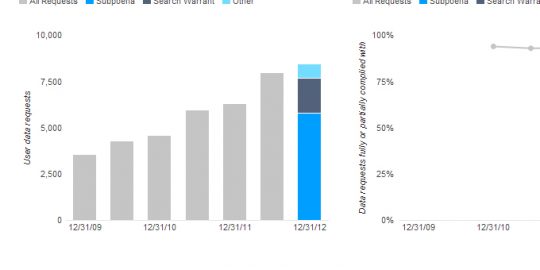
Google received more than 8,000 requests for user data from the U.S. government in the second half of 2012, and nearly all of them were the result of a subpoena or search warrant. The number of those requests that the company complied with by producing some or all of the data in question is still relatively high, at 88 percent, but declined slightly from the first half of last year.

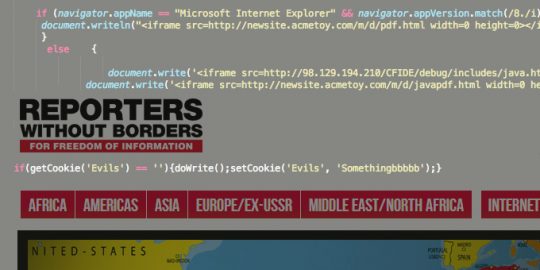
The Java saga continued when unknown, and apparently well concealed goons exploited recent Java and Internet Explorer zero-days to compromise the website of the French-based, free-press advocacy group, Reporters Without Borders. The attack, which attempted to take advantage of the time-gulf that separates Oracle’s patch release from their users’ application of it, is part of a watering hole campaign also targeting Tibetan and Uygur human rights groups as well as Hong Kong and Taiwanese political parties and other non-governmental organizations.