Malware


MiniDuke Espionage Malware Hits Governments in Europe Using Adobe Exploits

New espionage malware has been discovered that targets a patched sandbox-bypass vulnerability in Adobe Reader. The attacks have hit a relatively small number of government victims in 23 countries, primarily in Europe, and rely on a string of unusual tactics, including the use of steganography to hide backdoor code, as well as the capability to reach out to Twitter accounts created by the attackers for links to command and control servers.


Researchers Find Stuxnet Older Than Previously Believed

Researchers on Tuesday said they have proof the Stuxnet worm used to cripple Iran’s nuclear program has been in the wild two years longer than first believed. There’s also now evidence the military-grade malware’s origins date back to 2005, and possibly earlier.


The seemingly endless list of critical zero day bugs found in Java grew longer today with news that one of the flaws fixed in Oracle’s recent patches for the product is under attack and when that bug is paired with another, separate vulnerability, the sandbox in the latest build of Java can be bypassed.

Dennis Fisher talks with Anup Ghosh of Invincea about the recent wave of companies admitting to being hacked by APT groups, the difference between cyberespionage and cyberwar, what the government can do to encourage more intelligence sharing and whether compromised companies are spending enough time on attribution.

People looking to download and read the Mandiant report on Chinese government attacks on U.S. infrastructure should look carefully at the name of the file before opening it. Researchers say that there are at least two different spear-phishing attacks going on right now that are using rigged copies of the China APT1 report as lures.

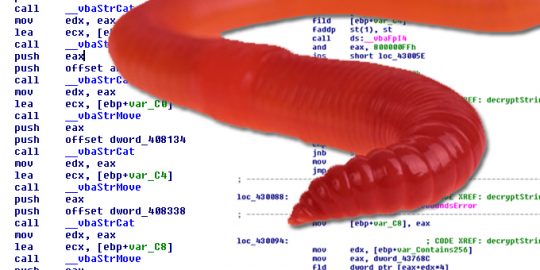
W32/Autorun.worm.aaeb-h is an evolved, virtual machine-aware AutoRun worm that makes use of  obfuscation and polymorphic techniques in order to evade detection and infect removable media and mounted network shares, according to McAfee.Researchers have seen an increase in samples for the year-old malware family, which is compiled in Visual Basic 6.

Researchers have noticed a spike in cyberattacks over the past few weeks targeting the Uyghur people, a Turkic ethnic group based primarily in China and Kazakhstan. The attacks have been exploiting a Microsoft Word vulnerability patched in June 2009, according to a Securelist post by Kaspersky Lab Senior Security Researcher Costin Raiu yesterday.