Malware


New Ransomware Encrypts Victim Data

An unusual new strain of ransomware makes good on its threat, doing what the majority of other varieties only claim to do. The Trojan actually encrypts data on infected machines, effectively rendering certain files inaccessible to users on compromised computers in order to block removal.


God Horses are Floating Clouds: The Story of a Chinese Banker Trojan

By Dong YanIn China these days, e-commerce has become an important part of daily life, especially among young people. According to a report from CNNIC (China Internet Network Information Center), the number of Chinese e-commerce users reached 242 million at the end of the December 2012. This is nearly half of all Chinese internet users.

Malware Poses as Faux Adobe Flash Update

Cybercriminals are perpetrating a spam campaign by sending out emails with malicious attachments containing a Pony downloader that uploads a Zeus Trojan to victim machines while also leading users to a number of compromised domains housing fake Adobe Flash Player updates in order to dupe the unsuspecting in to installing a variety of malware strains on their computers.


Charges will be brought today in the U.S. District Court for the Southern District of New York against three men allegedly involved with creating and distributing the Gozi banking Trojan. Gozi infected more than a million computers worldwide, including a handful at NASA, leading to tens of millions of dollars in lost banking funds and damages to computer systems and networks.

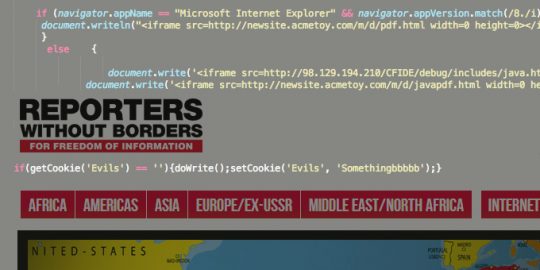
The Java saga continued when unknown, and apparently well concealed goons exploited recent Java and Internet Explorer zero-days to compromise the website of the French-based, free-press advocacy group, Reporters Without Borders. The attack, which attempted to take advantage of the time-gulf that separates Oracle’s patch release from their users’ application of it, is part of a watering hole campaign also targeting Tibetan and Uygur human rights groups as well as Hong Kong and Taiwanese political parties and other non-governmental organizations.

With Skype expanding its reach with services designed for small businesses, and other messaging platforms such as Microsoft Windows Messenger shutting down, Skype is becoming an attractive target for malware writers.Reports surfaced last week of the Shylock financial malware spreading on Skype and yesterday, researchers reported the discovery of more malware propagating on Skype.  

A Canadian college student was expelled after reporting a vulnerability in the school’s Web site that potentially exposed private data on more than 250,000 students.The high-achieving computer science major, Hamed Al-Khabaz and another student, Ovidiu Mija, in November were developing a mobile app using Omnivox Web portal software when they discovered “sloppy coding” that could lead to a major data breach. Ominvox is used at hundreds of Canadian campuses, including theirs at Montreal’s Dawson College.