Malware


Flame Malware: Boring, Bloated and Yet Still Effective

Let us stipulate that governments of all political affiliations are trying to steal information from one another. This is called espionage and it has been happening for thousands of years and the only things that have changed are the tactics and the technology. The discovery of the Flame malware–which looks to be the digital equivalent of a spy’s black bag–doesn’t change any of this, but it does raise one big question, and that is not who is writing tools like Flame, but who isn’t?

Foncy is Dead, Long Live Mania

By Denis MaslennikovIn the middle of January 2012 Foncy was updated: it started to spread together with an IRC bot and a root exploit. But the end of the Foncy story was very close because in February two suspected authors of this malware were arrested in Paris: you can read the story here in French and here in English. Since then we haven’t found any new modifications of this piece of malware.

What’s the Meaning of This: Flame Malware

From all indications, it would appear that attackers are continuing to attack and malware authors are carrying on writing malware. The latest bit of evidence to support these conclusions is the discovery of the Flame malware, which, initial analyses show, is an advanced data-stealing tool that is being used in targeted attacks against organizations in Iran, Syria and Palestine, and has experts speculating that Flame was built by a Western intelligence agency or military.


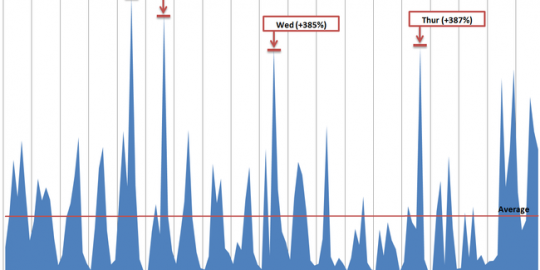
While there are an increasing number of weekends catered to hacking, even hackers need a day off – and it shouldn’t surprise many that increasingly, that day is usually Sunday. Network security company FireEye reviewed statistics on email-based attacks for 2012 that suggest that Sunday has slowed into a “day of rest” for hackers.

An Armenian court sentenced a 27-year old Russian man to four years in jail this week following his conviction in connection with the infamous Bredolab botnet that infected 30 million computers over the last few years.G. Avanesov, later identified as Georgy Avanesov by several media outlets, was officially sentenced for committing computer sabotage by the Court of First Instance of Armenia’s Arabkir and Kanaker-Zeytun administrative districts Monday.

With a deadline for users to disinfect their computers or potentially lose Internet access thanks to the DNSchanger malware, Google is undertaking an effort to notify infected users through messages on search results pages. The federal government also is working to warn users about the infections and potential consequences if their machines aren’t cleaned by July 9.