New Ransomware Encrypts Victim Data

An unusual new strain of ransomware makes good on its threat, doing what the majority of other varieties only claim to do. The Trojan actually encrypts data on infected machines, effectively rendering certain files inaccessible to users on compromised computers in order to block removal.

God Horses are Floating Clouds: The Story of a Chinese Banker Trojan

By Dong YanIn China these days, e-commerce has become an important part of daily life, especially among young people. According to a report from CNNIC (China Internet Network Information Center), the number of Chinese e-commerce users reached 242 million at the end of the December 2012. This is nearly half of all Chinese internet users.

50 Million Potentially Vulnerable to UPnP Flaws

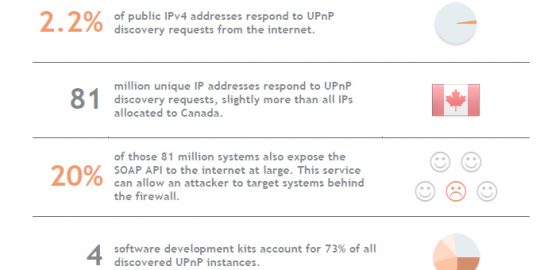
In a project that found more than 80 million unique IP addresses responding to Universal Plug and Play (UPnP) discovery requests, researchers at Rapid7 were shocked to find that somewhere between 40 and 50 million of those are vulnerable to at least one of three known attacks.


A vulnerability exists in Ruby on Rails’ JavaScript Object Notation (JSON) code that could open the Web framework up to a slew of security problems. Patches were published yesterday, but if left unpatched, the vulnerability could let attackers bypass authentication systems, inject arbitrary SQL code, inject and execute arbitrary code and perform a denial of service attack on a Ruby on Rails app.

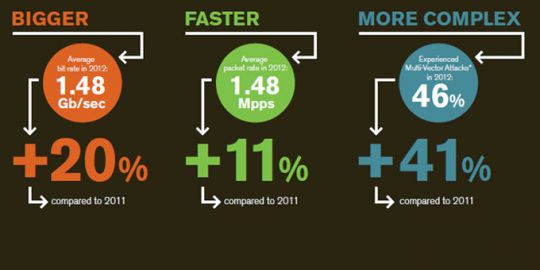
Back in the dark days of dial-up connectivity, attackers wouldn’t bother compromising home computers as bots to be used in distributed denial-of-service. The lack of bandwidth made PCs persona non grata in the DDoS world. Instead, attackers targeted Web servers, the only machines with the high-speed broadband connections to make DDoS viable.In the years since, broadband has literally come home and personal machines have been compromised by the millions for everything from spam to flood attacks against websites and online services.

Search giant Google is planning a third iteration of its vulnerability-finding contest, Pwnium. This year’s competition is set to be held alongside next month’s CanSecWest security conference on March 7 in Vancouver, BC. Unlike last year’s inaugural Pwnium, which was parallel to CanSecWest’s older Pwn2Own competition, this year Google teamed up with HP’s Zero Day Initiative, the group behind Pwn2Own, to work on the contest’s outlines and “underwrite a portion of the winnings.”

A Virginia appeals court on Friday denied a right-to-access order filed by the Electronic Frontier Foundation and the American Civil Liberties Union on behalf of Icelandic parliamentarian Birgitta Jonsdottir and computer security researchers Jacob Appelbaum and Rop Gonggrijp. The denial confirms a lower court’s ruling that neither those individuals nor the public has the right to see the documents a court uses to justify its warrantless acquisition of information.

Government requests for user account information made to Twitter pale in comparison to the number made to Google, but nonetheless, the number is on the rise according to Twitter’s Transparency Report, released today. Twitter’s report said government requests are generally made in conjunction with some kind of criminal investigation; 815 requests came from the United States government and Twitter complied 69 percent of the time; 57 percent worldwide.