Vulnerabilities


Google Announces Pwnium 3, Ups Ante and Offers $3M+ in Rewards

Search giant Google is planning a third iteration of its vulnerability-finding contest, Pwnium. This year’s competition is set to be held alongside next month’s CanSecWest security conference on March 7 in Vancouver, BC. Unlike last year’s inaugural Pwnium, which was parallel to CanSecWest’s older Pwn2Own competition, this year Google teamed up with HP’s Zero Day Initiative, the group behind Pwn2Own, to work on the contest’s outlines and “underwrite a portion of the winnings.”

WordPress Fixes 37 Bugs with Latest Update

WordPress pushed out version 3.5.1 of its open source blogging platform yesterday, fixing 37 bugs including several cross-site scripting (XSS) errors and a vulnerability that could have allowed an attacker to expose information and compromise an unpatched site.


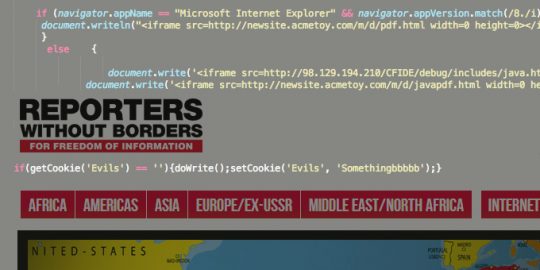
The Java saga continued when unknown, and apparently well concealed goons exploited recent Java and Internet Explorer zero-days to compromise the website of the French-based, free-press advocacy group, Reporters Without Borders. The attack, which attempted to take advantage of the time-gulf that separates Oracle’s patch release from their users’ application of it, is part of a watering hole campaign also targeting Tibetan and Uygur human rights groups as well as Hong Kong and Taiwanese political parties and other non-governmental organizations.

Researchers with Vulnerability Lab today announced mega payment processor PayPal has fixed a flaw on its site that allowed a remote user or a local user with low privileges to compromise a Web application using a blind SQL injection.The vulnerability was first reported to PayPal back in August, according to Softpedia, but the company waited until now to announce a fix. PayPal awarded the researchers a $3,000 bounty for responsibly disclosing their find.

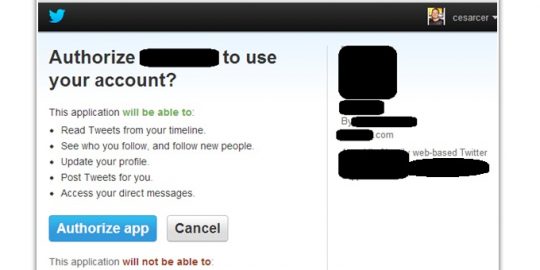
Social networking sites such as Twitter and Facebook have become not just communication hubs, but also authentication mechanisms for third-party sites. Many sites and Web applications allow users to sign in with their Facebook or Twitter credentials rather than registering, which is a nice convenience. That is, until, it turns into a security liability. Security researcher Cesar Cerrudo recently discovered a bug in Twitter’s code that enabled third-party apps to access users’ private direct messages under some circumstances, even when users had not explicitly granted those apps that level of access.

A Canadian college student was expelled after reporting a vulnerability in the school’s Web site that potentially exposed private data on more than 250,000 students.The high-achieving computer science major, Hamed Al-Khabaz and another student, Ovidiu Mija, in November were developing a mobile app using Omnivox Web portal software when they discovered “sloppy coding” that could lead to a major data breach. Ominvox is used at hundreds of Canadian campuses, including theirs at Montreal’s Dawson College.

It’s really starting to feel like we’re piling on the perennially vulnerable, industry punching bag that is Java. That said, GFI Labs and other security firms are warning their users to be wary of malicious fake Java updaters taking advantage of all the patches Oracle had to ship last week.