Web Security


Deluge of Election-Related Spam, Threats Begins

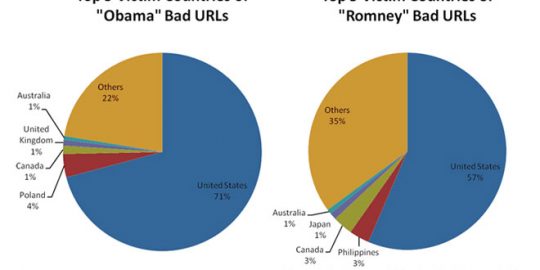
It was only a matter of time before the inevitable wave of malicious, election-tinged spam began to rain down upon internet users. In the wake of last week’s presidential debate between President Barack Obama and Republican nominee Mitt Romney, it appears the floodgates have opened.


Businesses Remain Scared of Spear-Phishing as Attackers Study Behavior

Scared is a strong word, but the reality, according to a Websense analysis by Patrik Runald, is that spear-phishers, like the ones that compromised a White House network last week, are implementing new evasion tactics, fundamentally changing their attack strategies, and revolutionizing the targeted threat model, giving business executives plenty of reason to worry.


Hundreds of thousands of users who signed up for an inexpensive proxy service called Proxybox.name got quite a steal alright. They ended up installing a Trojan horse linked to a botnet first detected last summer.Researchers at Symantec reverse engineered the Backdoor.Proxybox malware and unearthed a major black hat operation and perhaps the actual malware developer.

A flurry of fake, ad-laden Angry Birds lookalike games have flooded the Google Chrome Web store of late. The online marketplace where Google sells extensions and games for its Chrome browser has seen an influx of games mimicking “Bad Piggies,” a new game Rovio Entertainment recently released that puts a twist on its ubiquitous Angry Birds game.

One of the things that makes attackers dance around their basement lairs is finding unencrypted Web sessions. Sites that don’t give users the option to use HTTPS make life that much easier for attackers trying to hijack users’ Web sessions or eavesdrop on them. The IETF has taken a big step toward making that more difficult, approving the HTTP Strict Transport Security (HSTS) proposal as an Internet-draft.