Ryan Naraine

Google + reCAPTCHA Could Raise Bar in Anti-Bot, Anti-Spam Fight

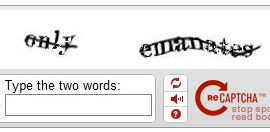
Locked in a cat-and-mouse game with spammers who use bots to defeat anti-fraud mechanisms and create fake accounts, Google today announced a deal to acquire reCAPTCHA, a company that provides those squiggly words at login screens.
The ReCAPTCHA deal isn’t exactly a security transaction.  Strategically, it gives Google an excellent crowd-sourcing tool to beef up its already impressive machine-vision algorithms (think book-scanning and maps) but, in the long run, the ability to use CAPTCHAs that are near-impossible for bots to decipher allows Google to raise the bar significantly in the fight against bots and spam.

Sophisticated Botnet Causing a Surge in Click Fraud

A new botnet has caused a sharp spike in click fraud because it is skirting the most sophisticated filters of search engines, Web publishers and ad networks, according to Click Forensics.
The company, which provides services to monitor ad campaigns for click fraud and reports on click fraud incidence every quarter, said on Thursday that the botnet’s architects have figured out a way to mask it particularly well as legitimate search ad traffic. Read the full story [computerworld.com]

Cybercriminals Riding Money Mules in Online Bank Robberies

Over on the Washington Post’s SecurityFix blog, Brian Krebs has been doing a phenomenal job highlighting the online bank robberies — using malware — against small businesses in the United States.
The latest installment, which looks at the role of “money mules” in the cybercrime operation is required reading.


Microsoft’s Security Development Lifecycle (SDL) team has released two new security tools to help developers test and verify the security of software programs.
The tools — BinScope Binary Analyzer and MiniFuzz File Fuzzer — are available for download at no cost.

Add the Radisson Hotels & Resorts chain to the growing list of businesses [datalossdb.org] reporting significant data breaches that exposed sensitive customer data.
In an open letter [radisson.com] to guests, Radisson chief operating officer Fredrik Korallus said the hotel chain’s computer system was hacked between November 2008 and May 2009 and customer data, including credit and debit card numbers, was stolen.  Read the full story [zdnet.com]

From The New York Times (Riva Richmond)
Corporate information technology departments are prioritizing the wrong threats to their computer systems, focusing on old problems and leaving their companies open to a raft of new cyberattacks targeting sensitive customer and corporate information.
That is the finding of a new biannual report from the SANS Institute, a training organization for computer security professionals, whose senior staff weighed two sets of data that have not been rigorously compared to date: data on the most common attacks hitting corporate networks and data on which vulnerabilities are most prevalent on company networks.  Read the full story [nytimes.com]   Read the full report [sans.org]

Four months after it modified Windows 7 to stop the Conficker worm from spreading through infected flash drives, Microsoft has ported the changes to older operating systems, including Windows XP and Vista.  Read the full story [computerworld.com]

Throughout the last two years, scareware (fake security software), quickly emerged as the single most profitable monetization strategy for cybercriminals to take advantage of. Due to the aggressive advertising practices applied by the cybercrime gangs, thousands of users fall victim to the scam on a daily basis, with the gangs themselves earning hundreds of thousands of dollars in the process. 
This end user-friendly guide aims to educate the Internet user on what scareware is, the risks posed by installing it, how it looks like, its delivery channels, and most importantly, how to recognize, avoid and report it to the security community taking into consideration the fact that 99% of the current releases rely on social engineering tactics.  Read the full story [zdnet.com]