Government


Health Care Breach Notification Mandated

From SC Magazine (Angela Moscaritolo)

Two new rules were created this week requiring health care organizations, and other entities that interact with personal health records (PHRs), to issue notifications in the event of a data breach.

The key rule, issued Wednesday by the U.S. Department of Health and Human Services (HHS), requires health care organizations subject to Health Insurance Portability and Accountability Act (HIPAA) regulations to notify individuals whose information has been breached, when the breach affects more than 500 individuals. Breaches affecting fewer than 500 individuals must be reported to the HHS annually. Read the full story [scmagazineus.com] 

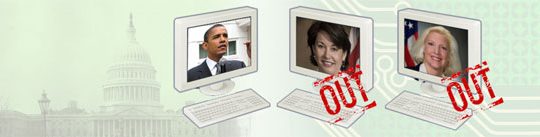
Obama is Failing the Cybersecurity Test

That giant sucking sound you hear is the steady stream of talented security people and experienced policy makers getting out of Washington as quickly as possible as the Obama administration continues to be paralyzed by indecision and a lack of direction regarding cybersecurity.


Melissa Hathaway has left her post as the country’s top cybersecurity adviser, casting even more doubt on who will take the open job of cybersecurity coordinator created by President Obama in May. Hathaway said she is resigning for personal reasons and has no interest in the coordinator job, according to the Wall Street Journal.

Guest Editorial by Abe Kleinfeld

Cyberwar is no longer an urban legend. From Estonia to Georgia to Israel, cyberwar has become a regular part of geopolitical struggles around the globe, and it promises to become a growing factor in future international conflicts.

Even skeptics have to admit that the economics behind cyber warfare are compelling. It’s inexpensive to mount a cyberwar. In comparison to traditional warfare, cyberwars are a bargain. You don’t need to fund and deploy specialized troops with expensive technology and weapons. You don’t need to worry about recruiting soldiers and keeping your supply lines open. All you need to disrupt your enemy’s communications and possibly its economy using a few people with specialized skills and Internet connections. In fact, you don’t even need to own all the assets deployed in a cyberwar.

By Chris Wysopal, Veracode
Let’s take a step back for a moment from who the actors are in the recent DDoS attacks and look at the root cause of the problem, because that isn’t going away. We have a horribly insecure software ecosystem that lets the bad guys take advantage of all the insecure software that vendors have shipped in the last 5 years to build distributed denial of service (DDoS) armies. The attackers then target these DDos armies at whoever they choose and are able to shut down their networks.

From The New York Times (Choe Sang-Hun)
Cyberattacks that have crippled the Web sites of several major American and South Korean government agencies since the July 4th holiday weekend appear to have been launched by a hostile group or government, South Korea’s main government spy agency said on Wednesday. Read the full story [NYTimes.com].

In his short time in office, Barack Obama has moved swiftly to address many of the problems facing the country: the financial crisis, the impending death of the auto industry and the lack of a playoff system in college football. But, despite his reassurances at a press conference in May, Obama has been stuck in neutral on the issue of cybersecurity.