Mobile Security


New iOS 6.1 Flaw Allows Access to iPhone’s Contacts, Photos

UPDATE – With enough work, users can bypass the lockscreen on Apple’s ubiquitous iPhone by exploiting a flaw on its most recent operating system iOS 6.1. By simply making an emergency call and holding down the power button on an iPhone twice, users can gain access to the device’s phone feature, view and edit contacts, check voicemail and look through photos, according to reports today.

Google Play Gives User Data to App Devs

Android application developer Dan Nolan claims that the Google Play store sends software developers the names, approximated locations, and email addresses of every individual that downloads one of their applications.

DARPA, FIDO Alliance Join Race to Replace Passwords

Nearly everyone agrees that passwords are the bane of Internet security. For years, industry thinkers have somewhat vaguely referenced the need for Internet fingerprints capable of reliably verifing identities online. Yet here we are, it’s 2013 and passwords remain the primary means of authenticating users onto networks and workstations.


SAN JUAN, Puerto Rico–Phil Zimmermann has seen more changes in the the threat landscape in his career than he may care to remember. The inventor of the PGP encryption software and one of the key movers in the crypto wars of the early 1990s, Zimmermann is back in the game now with a new mobile crypto system that’s designed to help take the prospect of government eavesdropping and criminal attacks on mobile communications off the table.

A new bit of malware is targeting popular apps on Android mobile devices to spew costly spam.Beijing- and Dallas-based NQ Mobile said at least 600,000 Chinese users have been hit with the malicious code named “Bill Shocker” (a.expense.Extension.a) because it runs up the bills of infected users while sending spam messages using their devices. So far, the infection seems contained to China, but its success may pose an international danger based on current traction.

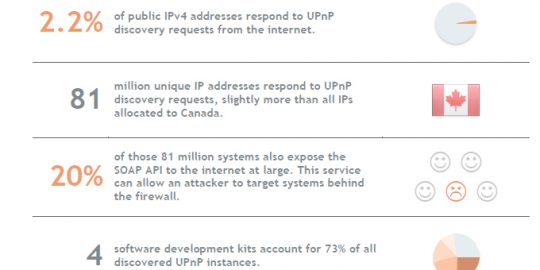
In a project that found more than 80 million unique IP addresses responding to Universal Plug and Play (UPnP) discovery requests, researchers at Rapid7 were shocked to find that somewhere between 40 and 50 million of those are vulnerable to at least one of three known attacks.