Google Sweetens Bug Bounty Pot
Google officials say that they will be handing out bonuses on top of existing rewards to security researchers who report especially troublesome flaws as part of their bug bounty program.
Google officials say that they will be handing out bonuses on top of existing rewards to security researchers who report especially troublesome flaws as part of their bug bounty program.
The DHS and ICS-CERT are warning users of some popular Tridium Niagara AX industrial control system software about a series of major vulnerabilities in the applications that are remotely exploitable and could be used to take over vulnerable systems. The bugs, discovered by researchers Billy Rios and Terry McCorkle, are just the latest in a series of vulnerabilities found in the esoteric ICS software packages that control utilities and other critical systems.
Adobe patched a huge number of flaws in its Reader software on Windows and Mac OS X on Tuesday, many of which were reported to the company by members of Google’s internal security team, which had set up a long-term fuzzing program to look for interesting crashes in the embedded PDF viewer in the Chrome browser. However, the Google researchers said that there are still a number of serious vulnerabilities in the application running on Windows and OS X that Adobe failed to patch and so the researchers have released limited details on the bugs and some advice for users on how to mitigate the risks from the vulnerabilities.
Adobe has issued a fix for a critical Flash vulnerability that attackers already are taking advantage of with targeted attacks. The flaw can allow attackers to get complete control of vulnerable machines, and Adobe said that it’s aware of attacks that are going after Flash on Internet Explorer.
Microsoft on Tuesday fixed a critical vulnerability in a component of Office, SQL Server and other widely deployed applications that attackers already are using in targeted attacks. The flaw in the Microsoft Common Controls component, which was one of the 26 vulnerabilities fixed in nine bulletins issued today, can be exploited remotely and Microsoft said that attackers have been using malicious RTF files sent via email to take advantage of the bug.
Oracle is warning customers about a vulnerability in the ubiquitous Oracle Database Server that can allow an attacker to gain complete control of the affected server. The CVE-2012-3132 vulnerability is not remotely exploitable by an unauthenticated user.
Do not envy the life of a Web app. It’s a brutal, public existence filled with attacks from all sides. In fact, a new report by Imperva sheds some light on this sad life, showing that a typical Web app is attacked once every three days and some are targeted as many as 2,700 times in a given year.
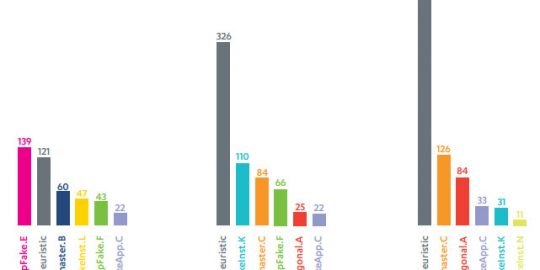
Android devices have remained a constant target of attacks over the last quarter thanks in part to new variants from the FakeInst and OpFake families of malware. According to the latest version of the F-Secure Mobile Threat Report, the firm found 5033 malicious Android application packages (APKs), a 64 percent increase over the 3063 the firm identified in the first quarter of 2012.

The Java CVE-2012-1723 vulnerability is suddenly the golden child of bugs. The flaw, which Oracle patched in June, has been the target of several pieces of malware and Web-based attacks of late, and now researchers say there is a phishing scam targeting payroll and HR employees that involves and exploit for the Java bug, as well.
SQL injection attacks have been going on for years, and the vulnerabilities and exploitation techniques are well-understood and widely discussed. However, they’re still quite prevalent and are used in a variety of scenarios. One recent example is the attack on a Yahoo site that resulted in a breach of 450,000 usernames and passwords. In this video, Ryan O’Boyle of Veracode discusses the nature of SQL injection attacks and how to defend against them.
Infosec Insider content is written by a trusted community of Threatpost cybersecurity subject matter experts. Each contribution has a goal of bringing a unique voice to important cybersecurity topics. Content strives to be of the highest quality, objective and non-commercial.
Sponsored Content is paid for by an advertiser. Sponsored content is written and edited by members of our sponsor community. This content creates an opportunity for a sponsor to provide insight and commentary from their point-of-view directly to the Threatpost audience. The Threatpost editorial team does not participate in the writing or editing of Sponsored Content.


