Vulnerabilities


An Analysis of the BlackBerry Spyware

From Zero in a Bit (Chris Eng)
Yesterday it was reported by various media outlets that a recent BlackBerry software update from Etisalat (a UAE-based carrier) contained spyware that would intercept emails and text messages and send copies to a central Etisalat server. We decided to take a look to find out more. Read the full story [Zero in a Bit].

Inside Microsoft’s July Security Patch Batch

By Eric Schultze
Microsoft released six security bulletins  today — three rated Critical and three rated Important.  Two of the issues are being actively exploited on the Internet and four of the issues are client-side vulnerabilities, which means the exploit can only occur if a user visits an evil website or opens a malformed document.

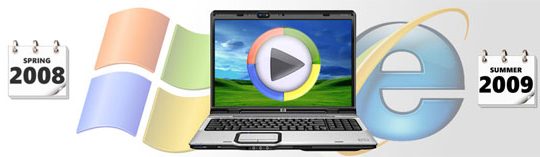
Today’s release is important because patches were released for two recent 0-day attacks – a QuickTime file parsing vulnerability and the recently announced Directshow vulnerability.  Both vulnerabilities are reported as being actively exploited on the Internet.

Microsoft Response on MsVidCtl Flaw Was Lacking

Microsoft has expended a massive amount of time, energy and money in the last few years to improve both the quality of its software and the speed and efficiency of its security response process. It has succeeded in large part on both counts, especially on the security and reliability of its products. But, as the company’s response to the privately disclosed MsVidCtl ActiveX vulnerability in Internet Explorer shows, Microsoft still has some ground to cover on the issue of timely response.


Microsoft today released six bulletins with fixes for at least nine documented security vulnerabilities in a range of products that put users at risk of malicious hacker attacks.

At least two of the vulnerabilities are currently being attacked in the wild so it’s imperative that Windows users and administrators treat these patches with the highest possible priority.

Exploit code for a “highly critical” vulnerability in Mozilla Firefox has been released on the Internet, putting millions of Web surfers at risk of remote code execution attacks.
The vulnerability is currently unpatched, according to an advisory from Secunia.

From SearchSecurity (Robert Westervelt)
Microsoft issued an advisory Monday, warning of a new vulnerability in Office Web Components being actively targeted by attackers. The Office Web Components allow users to view spreadsheets, charts and databases on the Web. Microsoft said the vulnerability is in the Spreadsheet ActiveX Control, which is used by Internet Explorer (IE) to display the data in the browser. It is remotely exploitable when a person browses with IE and visits a malicious website. If successfully exploited, an attacker could gain the same user rights as the local user and gain complete control of a system, Microsoft said. Read the full story [SearchSecurity].

By Eric Rescorla
Andy Zmolek of Avaya reports on VoIP security research company VoIPshield’s new policy requiring vendors to pay for full details of bugs in their products. He quotes from a letter VoIPShield sent him:
“I wanted to inform you that VoIPshield is making significant changes to its Vulnerabilities Disclosure Policy to VoIP products vendors. Effective immediately, we will no longer make voluntary disclosures of vulnerabilities to Avaya or any other vendor. Instead, the results of the vulnerability research performed by VoIPshield Labs, including technical descriptions, exploit code and other elements necessary to recreate and test the vulnerabilities in your lab, is available to be licensed from VoIPshield for use by Avaya on an annual subscription basis.

From Websense Security Labs
The recently publicized Zero-Day Vulnerability in Microsoft DirectShow is in the wild and spreads through infection of thousands of legitimate Web sites. The proof-of-concept of the vulnerability is out and exploitation is very easy to achieve. In our labs we have been tracking the spread of this new zero day—the first compromised domains mainly originating in China. Read the full story [Websense].

Microsoft’s July Patch Tuesday release will include a fix for the DirectShow vulnerability that was revealed in May, and the software giant said it likely will also have a patch available for a related flaw in the MsVidCtl ActiveX control that became public earlier this week and has been under active attack. The company said it has been working on a patch for the second vulnerability all week and believes that the fix should be ready for release July 15.

From Zero Day (Ryan Naraine)
Apple has released Safari 4.0.2 to fix a pair of security flaws that could lead to cross-site scripting or remote code execution attacks. The vulnerabilities affect Safari for Windows (XP and Vista) and Mac OS X. Read the full story [ZDNet].