Web Security


Go Daddy CEO Denies Hackers Behind Major Outage

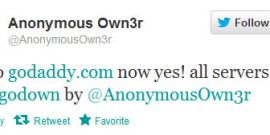
The CEO of Go Daddy said Tuesday internal issues, not a denial of service attack, left millions of hosted sites offline for several hours yesterday.

In a statement, interim chief executive Scott Wagner said an internal investigation into the outage concluded no outside attack took place.

While Windows 8 won’t officially be released until Oct. 26, according to reports over the weekend, the operating system already has a handful of Flash holes that could open the system up to exploits by attackers. The problem stems from the system’s browser, Internet Explorer 10, that’s coming with its own integrated version of Adobe’s Flash Player which hasn’t been updated since it was initially shipped.

Apple pushed out a Java update for its Snow Leopard, Lion and Mountain Lion systems Wednesday, fixing vulnerabilities Oracle tackled in last week’s emergency CVE-2012-4681 patch. Both Java for Mac OS X 10.6 Update 10 and Java for OS X 2012-005 update the Java SE 6 plugin and, in what might be a sign of Apple’s growing displeasure with the platform, help configure browsers to not automatically run Java applets.

There is a feature supported by the SSL/TLS encryption standard and used by most of the major browsers that leaks enough information about encrypted sessions to enable attackers decrypt users’ supposedly protected cookies and hijack their sessions. The researchers who developed the attack that exploits this weakness say that all versions of TLS are affected, including TLS 1.2, and that the cipher suite used in the encrypted session makes no difference in the success of the attack.

Nearly 100,000 Facebook users have been duped into installing third-party Chrome plugins over the past few weeks that have access to all of their data on every Web site they visit. According to research recently conducted by security firm Barracuda Networks, the unsuspecting users were tricked into thinking the plugins could block Timeline, a new profile feature Facebook first introduced at the end of 2011.

There’s been a huge jump in malicious, web-based infections targeting companies in the last year, a nearly 400 percent increase from last year, according to research released today by network security company FireEye. The company’s “Advanced Threat Report – 1H 2012,” blames the jump on attackers’ ability to penetrate organizations’ usual security infrastructures.

Boasting a new silent updater and an optimized memory management system, Mozilla pushed out Firefox 15 this week, the latest build of its flagship browser. Following similar steps taken by Adobe and Google with its Flash, Reader and Chrome products, Firefox’s new updater will now perform updates in the background, saving users from those pesky, sometimes intrusive notifications.